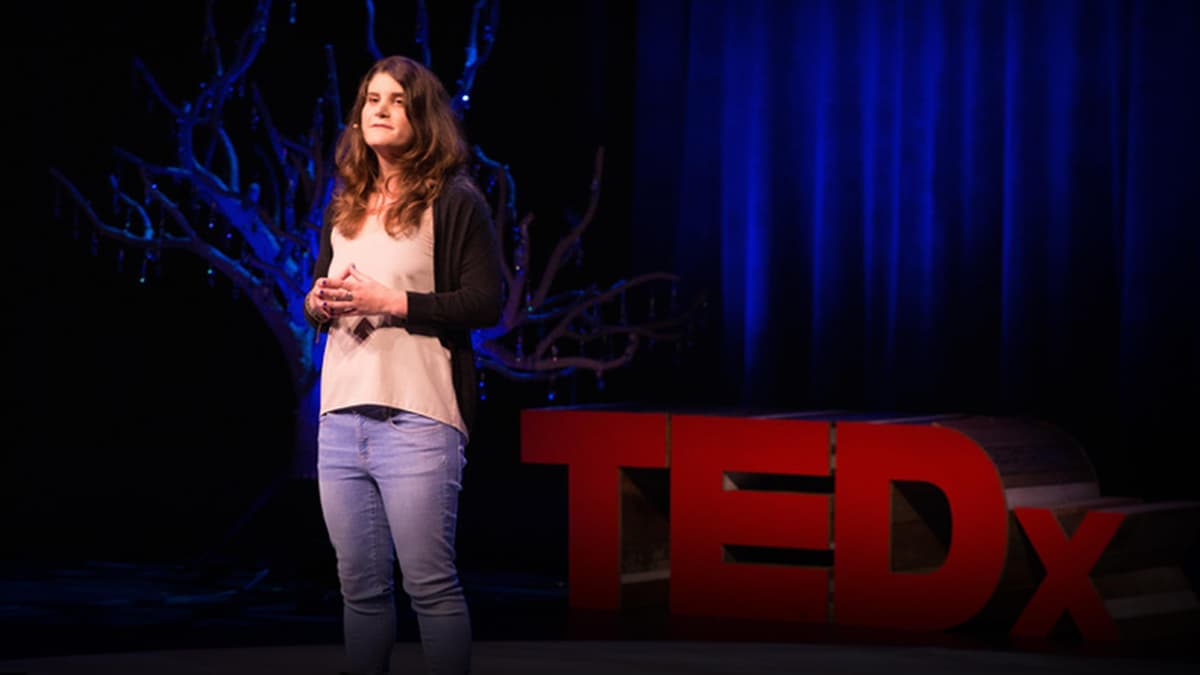
These bacteria eat plastic | Morgan Vague
Humans produce 300 million tons of new plastic each year -- yet, despite our best efforts, less than 10 percent of it ends up being recycled. Is there a better way to deal with all this waste? Morgan Vague describes her research with microbiologist Jay Mellies on bacteria that have evolved the unexpected ability to eat plastic -- and how they could help us solve our growing pollution problem.
۰:۰۰ / ۹:۰۰صوتی
صف پخش
- در حال پخش: These bacteria eat plastic | Morgan Vague
- بعدی: Are life-saving medicines hiding in the world's coldest places? | Normand Voyer
- بعدی: What to do when there's a polar bear in your backyard | Alysa McCall
- بعدی: The fantastically weird world of photosynthetic sea slugs | Michael Middlebrooks
- بعدی: Where does your sense of self come from? A scientific look | Anil Ananthaswamy
- بعدی: Can we feed ourselves without devouring the planet? | George Monbiot
گزارش مشکل فایل
اگر پخش یا دانلود این قسمت خراب است، به مدیر اطلاع دهید.
قسمتهای بعدی
How supercharged plants could slow climate change | Joanne Chory
Plants are amazing machines -- for millions of years, they've taken carbon dioxide out of the air and stored it underground, keeping a crucial check on the global climate. Plant geneticist Joanne Chory is working to…
A personal air-quality tracker that lets you know what you're breathing | Romain Lacombe
How often do you think about the air you're breathing? Probably not enough, says entrepreneur and TED Fellow Romain Lacombe. He introduces Flow: a personal air-quality tracker that fits in your hand and monitors…
Inside the black hole image that made history | Sheperd Doeleman
At the center of a galaxy more than 55 million light-years away, there's a supermassive black hole with the mass of several billion suns. And now, for the first time ever, we can see it. Astrophysicist Sheperd Doeleman,…
Can we regenerate heart muscle with stem cells? | Chuck Murry
The heart is one of the least regenerative organs in the human body -- a big factor in making heart failure the number one killer worldwide. What if we could help heart muscle regenerate after injury? Physician and…
To detect diseases earlier, let's speak bacteria's secret language | Fatima AlZahra'a Alatraktchi
Bacteria "talk" to each other, sending chemical information to coordinate attacks. What if we could listen to what they were saying? Nanophysicist Fatima AlZahra'a Alatraktchi invented a tool to spy on bacterial chatter…