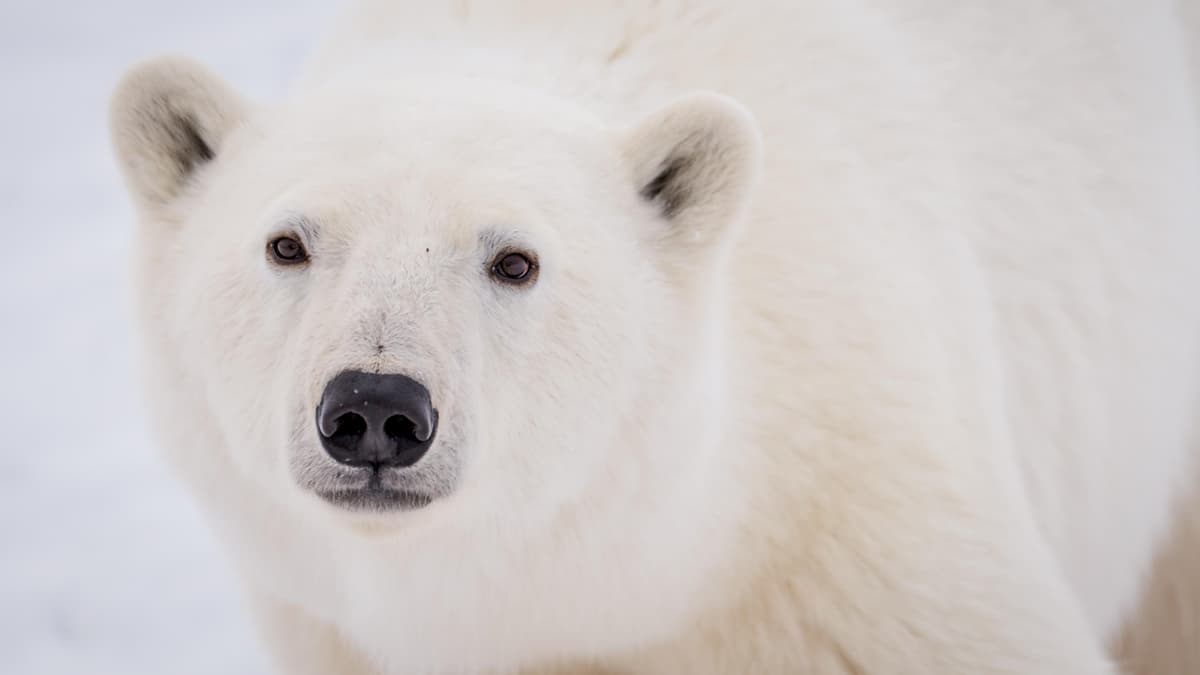
What to do when there's a polar bear in your backyard | Alysa McCall
As Arctic ice melts, polar bears are being forced on land -- and they're hungry. With the apex predators frequently turning to human junkyards for a snack, northern towns have had to get creative in order to keep both their people and wildlife safe. Biologist and conservationist Alysa McCall shares lessons from the field on how to safely navigate contact with these magnificent animals and plan for a future where climate change forces us all a little closer.
۰:۰۰ / ۱۰:۳۳صوتی
صف پخش
- در حال پخش: What to do when there's a polar bear in your backyard | Alysa McCall
- بعدی: Are life-saving medicines hiding in the world's coldest places? | Normand Voyer
- بعدی: The fantastically weird world of photosynthetic sea slugs | Michael Middlebrooks
- بعدی: Where does your sense of self come from? A scientific look | Anil Ananthaswamy
- بعدی: Can we feed ourselves without devouring the planet? | George Monbiot
- بعدی: How to harness the ancient partnership between forests and fungi | Colin Averill
گزارش مشکل فایل
اگر پخش یا دانلود این قسمت خراب است، به مدیر اطلاع دهید.
قسمتهای بعدی
Where does your sense of self come from? A scientific look | Anil Ananthaswamy
Our memories and bodies give us clues about who we are, but what happens when this guidance shifts? In this mind-bending talk, science writer Anil Ananthaswamy shares how the experiences of "altered selves" -- resulting…
Can we feed ourselves without devouring the planet? | George Monbiot
Farming is the worst thing humanity has ever done to the planet, says journalist George Monbiot. What's more: the global food system could be heading toward collapse. Detailing the technological solutions we need to…
How to harness the ancient partnership between forests and fungi | Colin Averill
If we want to better understand the environment and combat climate change, we need to look deep underground, where diverse microscopic fungal networks mingle with tree roots to form symbiotic partnerships, says…
The wheat field that could change the world | Guntur V. Subbarao
Crop physiologist Guntur V. Subbarao and his team have developed an antibiotic-infused strain of wheat that naturally combats harmful, fertilizer-eating bacteria -- a "monster" contributor to climate change. Learn more…
A virus-resistant organism -- and what it could mean for the future | Jason W. Chin
What if we could use the power of DNA to create a sustainable, circular economy? In a talk about breakthrough science, synthetic biologist Jason W. Chin describes his team's work rewriting the genetic blueprint of cells…