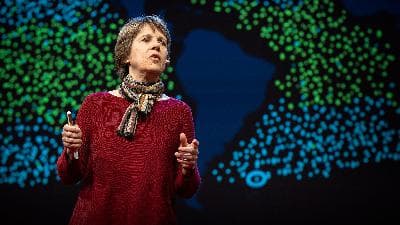
The tiny creature that secretly powers the planet | Penny Chisholm
Oceanographer Penny Chisholm introduces us to an amazing little being: Prochlorococcus, the most abundant photosynthetic species on the planet. A marine microbe that has existed for millions of years, Prochlorococcus wasn't discovered until the mid-1980s -- but its ancient genetic code may hold clues to how we can reduce our dependence on fossil fuels.
۰:۰۰ / ۱۶:۲۸صوتی
صف پخش
- در حال پخش: The tiny creature that secretly powers the planet | Penny Chisholm
- بعدی: Are life-saving medicines hiding in the world's coldest places? | Normand Voyer
- بعدی: What to do when there's a polar bear in your backyard | Alysa McCall
- بعدی: The fantastically weird world of photosynthetic sea slugs | Michael Middlebrooks
- بعدی: Where does your sense of self come from? A scientific look | Anil Ananthaswamy
- بعدی: Can we feed ourselves without devouring the planet? | George Monbiot
گزارش مشکل فایل
اگر پخش یا دانلود این قسمت خراب است، به مدیر اطلاع دهید.
قسمتهای بعدی
The surprising science of alpha males | Frans de Waal
In this fascinating look at the "alpha male," primatologist Frans de Waal explores the privileges and costs of power while drawing surprising parallels between how humans and primates choose their leaders. His research…
Four billion years of evolution in six minutes | Prosanta Chakrabarty
Did humans evolve from monkeys or from fish? In this enlightening talk, ichthyologist and TED Fellow Prosanta Chakrabarty dispels some hardwired myths about evolution, encouraging us to remember that we're a small part…
What we'll learn about the brain in the next century | Sam Rodriques
In this imaginative talk, neuroengineer Sam Rodriques takes us on a thrilling tour of the next 100 years in brain science. He envisions strange (and sometimes frightening) innovations that may be the key to…
The journey through loss and grief | Jason B. Rosenthal
In her brutally honest, ironically funny and widely read meditation on death, "You May Want to Marry My Husband," the late author and filmmaker Amy Krouse Rosenthal gave her husband Jason very public permission to move…
Let's turn the high seas into the world's largest nature reserve | Enric Sala
What if we could save the fishing industry and protect the ocean at the same time? Marine ecologist Enric Sala shares his bold plan to safeguard the high seas -- some of the last wild places on earth, which fall outside…