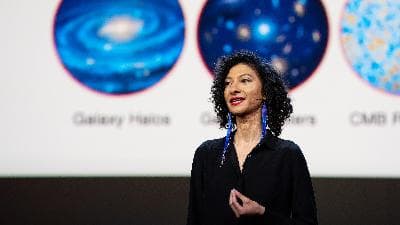
The search for the invisible matter that shapes the universe | Chanda Prescod-Weinstein
The universe that we know, with its luminous stars and orbiting planets, is largely made up of elements we can't actually see -- like dark energy and dark matter -- and therefore don't fully understand. Theoretical physicist Chanda Prescod-Weinstein takes us inside the search for this cosmos-shaping invisible matter and explains how, with the help of a new generation of telescopes, we could be closer to demystifying it than ever before. "The universe is more queer and fantastical than it looks to the naked eye," she says. (If you want to hear more from Prescod-Weinstein, check out her episode on "The TED Interview" podcast.)
۰:۰۰ / ۱۴:۵۲صوتی
صف پخش
- در حال پخش: The search for the invisible matter that shapes the universe | Chanda Prescod-Weinstein
- بعدی: Are life-saving medicines hiding in the world's coldest places? | Normand Voyer
- بعدی: What to do when there's a polar bear in your backyard | Alysa McCall
- بعدی: The fantastically weird world of photosynthetic sea slugs | Michael Middlebrooks
- بعدی: Where does your sense of self come from? A scientific look | Anil Ananthaswamy
- بعدی: Can we feed ourselves without devouring the planet? | George Monbiot
گزارش مشکل فایل
اگر پخش یا دانلود این قسمت خراب است، به مدیر اطلاع دهید.
قسمتهای بعدی
Humanity's search for cosmic truth and poetic beauty | Maria Popova
Linking together the histories of Henrietta Swan Leavitt, Edwin Hubble and Tracy K. Smith, poet and thinker Maria Popova crafts an astonishing story of how humanity came to see the edge of the observable universe.…
How mRNA medicine will change the world | Melissa J. Moore
The secret behind medicine that uses messenger RNA (or mRNA) is that it "teaches" our bodies how to fight diseases on our own, leading to groundbreaking treatments for COVID-19 and, potentially one day, cancer, the flu…
We can make COVID-19 the last pandemic | Bill Gates
Building a pandemic-free future won't be easy, but Bill Gates believes that we have the tools and strategies to make it possible -- now we just have to fund them. In this forward-looking talk, he proposes a…
5 promising factors propelling climate action | Gabriel Kra
Given the scale of the challenge, the conversation around climate change is often tinged with doom and gloom. But climate tech investor Gabriel Kra thinks we need to reframe the crisis as a source of tremendous…
The deep sea's medicinal secrets | Sam Afoullouss
Under the sea, untold wonders await in the form of untapped medicinal potential. Chemist Sam Afoullouss dives into the science behind natural remedies, explaining why the ocean's great (and still largely unexplored)…