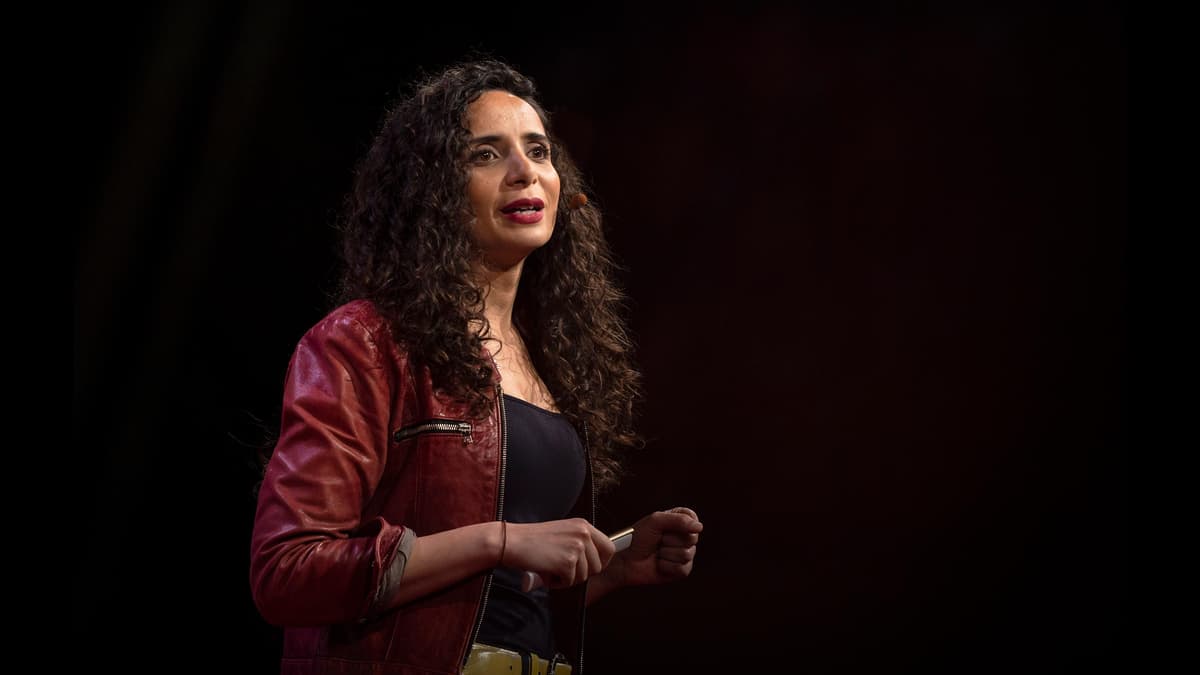
The fascinating (and dangerous) places scientists aren't exploring | Ella Al-Shamahi
We're not doing frontline exploratory science in a huge portion of the world -- the places governments deem too hostile or disputed. What might we be missing because we're not looking? In this fearless, unexpectedly funny talk, paleoanthropologist Ella Al-Shamahi takes us on an expedition to the Yemeni island of Socotra -- one of the most biodiverse places on earth -- and makes the case for scientists to explore the unstable regions that could be home to incredible discoveries.
۰:۰۰ / ۱۵:۴۰صوتی
صف پخش
- در حال پخش: The fascinating (and dangerous) places scientists aren't exploring | Ella Al-Shamahi
- بعدی: Are life-saving medicines hiding in the world's coldest places? | Normand Voyer
- بعدی: What to do when there's a polar bear in your backyard | Alysa McCall
- بعدی: The fantastically weird world of photosynthetic sea slugs | Michael Middlebrooks
- بعدی: Where does your sense of self come from? A scientific look | Anil Ananthaswamy
- بعدی: Can we feed ourselves without devouring the planet? | George Monbiot
گزارش مشکل فایل
اگر پخش یا دانلود این قسمت خراب است، به مدیر اطلاع دهید.
قسمتهای بعدی
5 challenges we could solve by designing new proteins | David Baker
Proteins are remarkable molecular machines: they digest your food, fire your neurons, power your immune system and so much more. What if we could design new ones, with functions never before seen in nature? In this…
The mysterious microbes living deep inside the earth -- and how they could help humanity | Karen Lloyd
The ground beneath your feet is home to a massive, mysterious world of microbes -- some of which have been in the earth's crust for hundreds of thousands of years. What's it like down there? Take a trip to the volcanoes…
The amazing brains and morphing skin of octopuses and other cephalopods | Roger Hanlon
Octopus, squid and cuttlefish -- collectively known as cephalopods -- have strange, massive, distributed brains. What do they do with all that neural power? Dive into the ocean with marine biologist Roger Hanlon, who…
These bacteria eat plastic | Morgan Vague
Humans produce 300 million tons of new plastic each year -- yet, despite our best efforts, less than 10 percent of it ends up being recycled. Is there a better way to deal with all this waste? Morgan Vague describes her…
Sloths! The strange life of the world's slowest mammal | Lucy Cooke
Sloths have been on this planet for more than 40 million years. What's the secret to their success? In a hilarious talk, zoologist Lucy Cooke takes us inside the strange life of the world's slowest mammal and shows what…