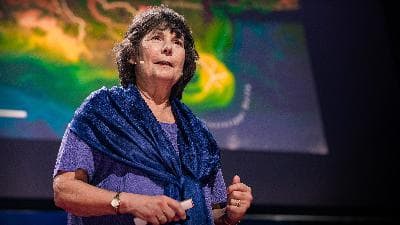
The "dead zone" of the Gulf of Mexico | Nancy Rabalais
Ocean expert Nancy Rabalais tracks the ominously named "dead zone" in the Gulf of Mexico -- where there isn't enough oxygen in the water to support life. The Gulf has the second largest dead zone in the world; on top of killing fish and crustaceans, it's also killing fisheries in these waters. Rabalais tells us about what's causing it -- and how we can reverse its harmful effects and restore one of America's natural treasures.
۰:۰۰ / ۱۱:۵۳صوتی
صف پخش
- در حال پخش: The "dead zone" of the Gulf of Mexico | Nancy Rabalais
- بعدی: Are life-saving medicines hiding in the world's coldest places? | Normand Voyer
- بعدی: What to do when there's a polar bear in your backyard | Alysa McCall
- بعدی: The fantastically weird world of photosynthetic sea slugs | Michael Middlebrooks
- بعدی: Where does your sense of self come from? A scientific look | Anil Ananthaswamy
- بعدی: Can we feed ourselves without devouring the planet? | George Monbiot
گزارش مشکل فایل
اگر پخش یا دانلود این قسمت خراب است، به مدیر اطلاع دهید.
قسمتهای بعدی
How fungi recognize (and infect) plants | Mennat El Ghalid
Each year, the world loses enough food to feed half a billion people to fungi, the most destructive pathogens of plants. Mycologist and TED Fellow Mennat El Ghalid explains how a breakthrough in our understanding of the…
The wonderful world of life in a drop of water | Simone Bianco and Tom Zimmerman
"Hold your breath," says inventor Tom Zimmerman. "This is the world without plankton." These tiny organisms produce two-thirds of our planet's oxygen -- without them, life as we know it wouldn't exist. In this talk and…
How we look kilometers below the Antarctic ice sheet | Dustin Schroeder
Antarctica is a vast and dynamic place, but radar technologies -- from World War II-era film to state-of-the-art miniaturized sensors -- are enabling scientists to observe and understand changes beneath the continent's…
The brain-changing benefits of exercise | Wendy Suzuki
What's the most transformative thing that you can do for your brain today? Exercise! says neuroscientist Wendy Suzuki. Get inspired to go to the gym as Suzuki discusses the science of how working out boosts your mood…
The role of human emotions in science and research | Ilona Stengel
Do human emotions have a role to play in science and research? Material researcher Ilona Stengel suggests that instead of opposing each other, emotions and logic complement and reinforce each other. She shares a case…