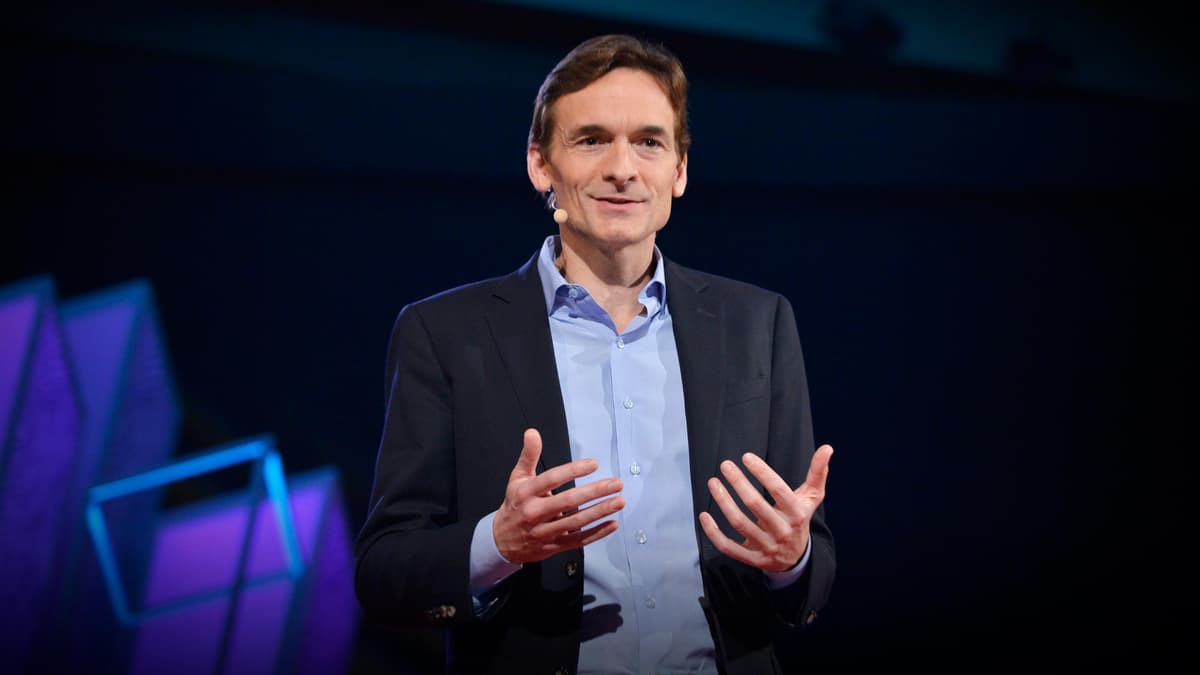
How data is helping us unravel the mysteries of the brain | Steve McCarroll
Geneticist Steve McCarroll wants to make an atlas of all the cells in the human body so that we can understand in precise detail how specific genes work, especially in the brain. In this fascinating talk, he shares his team's progress -- including their invention of "Drop-seq," a technology that allows scientists to analyze individual cells at a scale that was never before possible -- and describes how this research could lead to new ways of treating mental illnesses like schizophrenia.
۰:۰۰ / ۱۷:۲۲صوتی
صف پخش
- در حال پخش: How data is helping us unravel the mysteries of the brain | Steve McCarroll
- بعدی: Are life-saving medicines hiding in the world's coldest places? | Normand Voyer
- بعدی: What to do when there's a polar bear in your backyard | Alysa McCall
- بعدی: The fantastically weird world of photosynthetic sea slugs | Michael Middlebrooks
- بعدی: Where does your sense of self come from? A scientific look | Anil Ananthaswamy
- بعدی: Can we feed ourselves without devouring the planet? | George Monbiot
گزارش مشکل فایل
اگر پخش یا دانلود این قسمت خراب است، به مدیر اطلاع دهید.
قسمتهای بعدی
A rare galaxy that's challenging our understanding of the universe | Burçin Mutlu-Pakdil
What's it like to discover a galaxy -- and have it named after you? Astrophysicist and TED Fellow Burçin Mutlu-Pakdil lets us know in this quick talk about her team's surprising discovery of a mysterious new galaxy type.
Where are all the aliens? | Stephen Webb
The universe is incredibly old, astoundingly vast and populated by trillions of planets -- so where are all the aliens? Astronomer Stephen Webb has an explanation: we're alone in the universe. In a mind-expanding talk,…
A new way to monitor vital signs (that can see through walls) | Dina Katabi
At MIT, Dina Katabi and her team are working on a bold new way to monitor patients' vital signs in a hospital (or even at home), without wearables or bulky, beeping devices. Bonus: it can see through walls. In a…
How to build synthetic DNA and send it across the internet | Dan Gibson
Biologist Dan Gibson edits and programs DNA, just like coders program a computer. But his "code" creates life, giving scientists the power to convert digital information into biological material like proteins and…
How we study the microbes living in your gut | Dan Knights
There are about a hundred trillion microbes living inside your gut -- protecting you from infection, aiding digestion and regulating your immune system. As our bodies have adapted to life in modern society, we've…