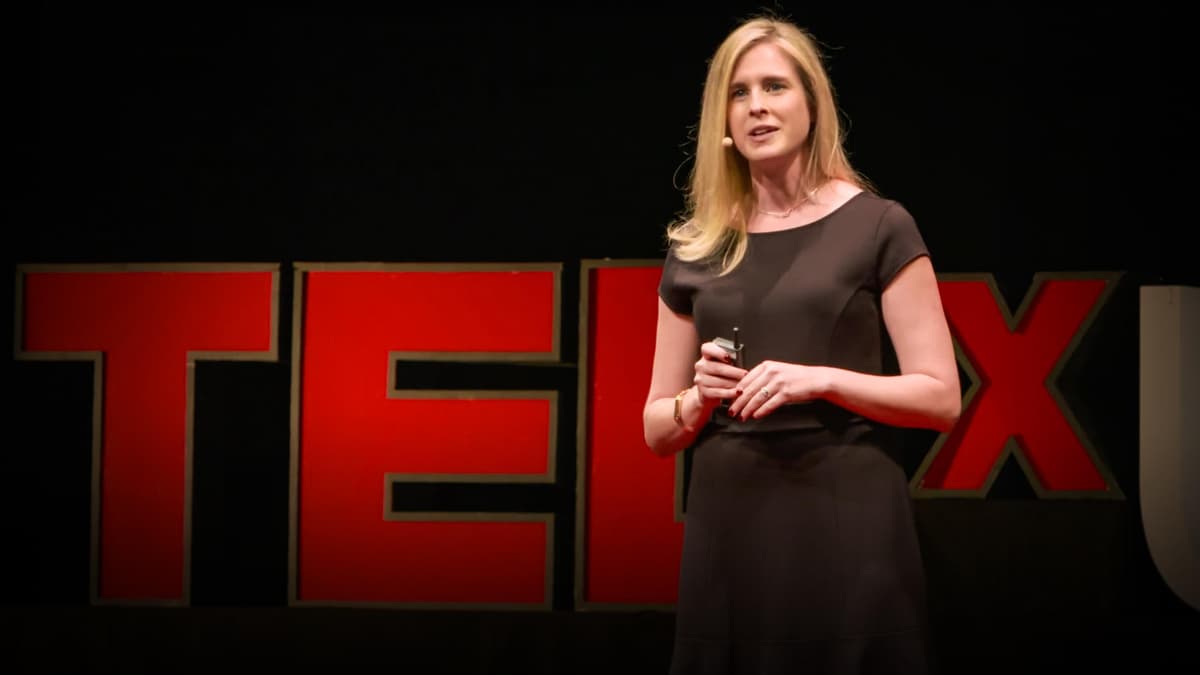
How a miniaturized atomic clock could revolutionize space exploration | Jill Seubert
Ask any deep space navigator like Jill Seubert what makes steering a spacecraft difficult, and they'll tell you it's all about the timing; a split-second can decide a mission's success or failure. So what do you do when a spacecraft is bad at telling time? You get it a clock -- an atomic clock, to be precise. Let Seubert whisk you away with the revolutionary potential of a future where you could receive stellar, GPS-like directions -- no matter where you are in the universe.
۰:۰۰ / ۱۱:۰۷صوتی
صف پخش
- در حال پخش: How a miniaturized atomic clock could revolutionize space exploration | Jill Seubert
- بعدی: Are life-saving medicines hiding in the world's coldest places? | Normand Voyer
- بعدی: What to do when there's a polar bear in your backyard | Alysa McCall
- بعدی: The fantastically weird world of photosynthetic sea slugs | Michael Middlebrooks
- بعدی: Where does your sense of self come from? A scientific look | Anil Ananthaswamy
- بعدی: Can we feed ourselves without devouring the planet? | George Monbiot
گزارش مشکل فایل
اگر پخش یا دانلود این قسمت خراب است، به مدیر اطلاع دهید.
قسمتهای بعدی
The science of friction -- and its surprising impact on our lives | Jennifer Vail
Tribology: it's a funny-sounding word you might not have heard before, but it could change how you see and interact with the physical world, says mechanical engineer Jennifer Vail. Offering lessons from tribology -- the…
A new type of medicine, custom-made with tiny proteins | Christopher Bahl
Some common life-saving medicines, such as insulin, are made of proteins so large and fragile that they need to be injected instead of ingested as pills. But a new generation of medicine -- made from smaller, more…
What ocean microbes reveal about the changing climate | Angelicque White
When the ocean changes, the planet changes -- and it all starts with microbes, says biological oceanographer Angelicque White. Backed by decades of data, White shares how scientists use these ancient microorganisms as a…
Are indoor vertical farms the future of agriculture? | Stuart Oda
By 2050, the global population is projected to reach 9.8 billion. How are we going to feed everyone? Investment-banker-turned-farmer Stuart Oda points to indoor vertical farming: growing food on tiered racks in a…
How designing brand-new enzymes could change the world | Adam Garske
"If DNA is the blueprint of life, enzymes are the laborers that carry out its instructions," says chemical biologist Adam Garske. In this fun talk and demo, he shows how scientists can now edit and design enzymes for…