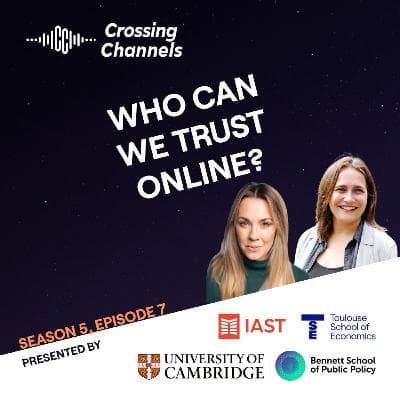
In this episode of Crossing Channels, host Richard Westcott talks with Rachel Adams (University of Cambridge) and Tiziana Assenza (Toulouse School of Economics) about who we can trust online, how AI, platform algorithms, and human psychology shape the spread of misinformation, and what institutions can do to safeguard democracy and build a healthier digital environment. They explore why misinformation is not only about false content, but also about the systems that decide what people see, when they see it, and at what scale. The conversation examines how people often overestimate their own ability to spot misinformation, why emotional and identity-based reactions make false information spread, and how AI can deepen inequalities between countries with very different levels of regulation, digital literacy and platform accountability. They also discuss the risks for democracy, children and public debate, the economic consequences of technology-related misinformation, and what governments, platforms, schools and independent institutions can do to build a healthier and more trustworthy online information environment. Listen to this episode on your preferred podcast platform Season 5 Episode 7 transcript For more information about the Crossing Channels podcast series and the work of the Bennett School of Public Policy and IAST visit our websites at https://www.bennettschool.cam.ac.uk/ and https://www.iast.fr/. Follow us on Linkedin and Bluesky.